Roof replacement becomes a question when homeowners are faced with the choice of replacing it or laying new roofing on top. While a new roof installation can cost you a lot, laying a new one on top of the old one saves you a lot of money. But not every roof is capable of supporting another roof laid atop it. Some have already had one laid before and can no longer withstand the added weight. In other instances, you have to tear down the current roofing system to the deck and put a new one on top.
How do you decide which one you should go for? That is the question we try to answer for you in this blog. If you are in the market looking for a high-end and capable roofing company, look no further than Flat Roofing Company. Their expertise on the matter and hands-on experience are just what you need.
Building Codes & Roof Replacement: What to expect
Building codes can be sneaky at times, and we don’t want it to be too late into construction before you realize it’s not permitted. Before you consider material options or pricing, the very first step is checking local building regulations. Most municipal building codes strictly govern roof recoveries under a universal rule. The rule states that if a building already has two or more layers of roofing installed, you are not allowed to add a third layer.
This might throw a wrench into your flat roof overlay plans, but it is for your own safety. In such cases, a complete teardown to the structural deck is required. However, if your flat roof consists of only a single layer, building codes generally permit installing a second layer on top, provided specific structural and moisture conditions are met.
Advantages of Recovering a Flat Roof
There are several tangible benefits associated with opting for an overlay rather than a complete tear-off for both residential and commercial flat roof overlay.
- Removing an old roof generates significant labor costs. It also contributes to landfill disposal fees. An overlay, however, bypasses most tear-off costs, typically reducing total job expenses most tear-off costs, typically reducing total job expenses by 20% to 35%.
- Because there is little to no roof that needs to be taken off before the new one is installed, installation moves far quicker. It saves you a lot of time compared to a new installation. It also minimizes disruption to tenants, operations, and daily business.
- If you add a high-density cover board and a new membrane, it provides you with an opportunity to layer additional rigid insulation. Putting this over the old roof immediately enhances the building’s thermal resistance and lowers energy bills. One of the great advantages of flat roof overlay.
- During a complete tear-off, the roof is open, and the inside of your home is exposed to weather. An overlay leaves the existing roof intact throughout construction, virtually eliminating water intrusion risks during installation.
Flat Roof Overlay vs. Complete Tear-Off
| Factor | Roof Overlay (Recover) | Complete Tear-Off |
| Upfront Cost | 20% – 35% lower | Higher (Labor + landfill fees) |
| Project Duration | Fast (Minimal disruption) | Moderate to long |
| Substrate Inspection | Limited (Deck condition hidden) | Complete visibility of structural deck |
| Longevity & Warranty | 15 – 20 Years (Varies by manufacturer) | 20 – 30+ Years (Full manufacturer warranty) |
| Future Replacement | Must tear off both layers next time | Resets building back to single-layer status |
When overlaying a roof, material compatibility is vital. Chemical reactions between incompatible materials, such as raw asphalt contacting single-ply PVC, can degrade membranes rapidly. Your contractor can easily educate you on what materials to pick, considering the condition of your roof. Materials make up a huge part of flat roof overlay requirements.
Consider the Roof’s Drainage Design
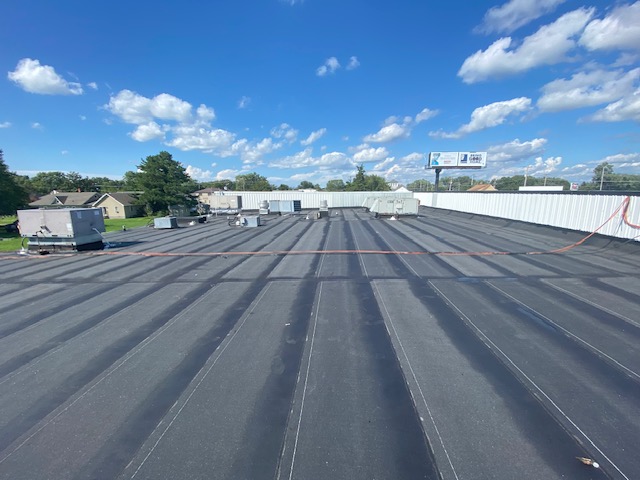
A flat roof depends heavily on proper drainage because water has fewer natural paths to leave the surface. When planning any roofing work, check that drains, scuppers, and downspouts are positioned correctly and remain clear of debris. Poor drainage can shorten the life of a new roofing system and create problems that are expensive to correct later. If the property needs a different roofing solution, Metal Roofing in Newark, DE can also be considered for areas where its installation is suitable.
Conclusion
Installing a new roof over an existing flat roof can be a smart roof replacement strategy for you, as you can save a lot of time and money in the process. However, you need to also abide by the building codes and make sure your roof can structurally support another one on top of it. A lot of times, people go for the cheaper option, thinking it would save money but end up paying for it later. Having your roof inspected by a reliable and trustworthy contractor like Flat Roofing Company is a great idea.
Frequently Asked Questions
How many layers of flat roofing are legally allowed?
Most building codes allow a maximum of two layers. A third layer requires teardown.
How much money does a flat roof overlay save?
It can save you 20% to 35% on your roof installation and labor costs.
Can you install a new flat roof over wet insulation?
No, trapped moisture causes severe blistering, membrane failure, and structural rot.
Do you need a cover board between the old and new flat roof?
Yes, a high-density cover board creates a smooth substrate, prevents punctures, and separates incompatible materials.
How do contractors test for hidden water under a flat roof?
Contractors use infrared thermal moisture scans, nuclear moisture gauges, or physical core samples to check for moisture.